
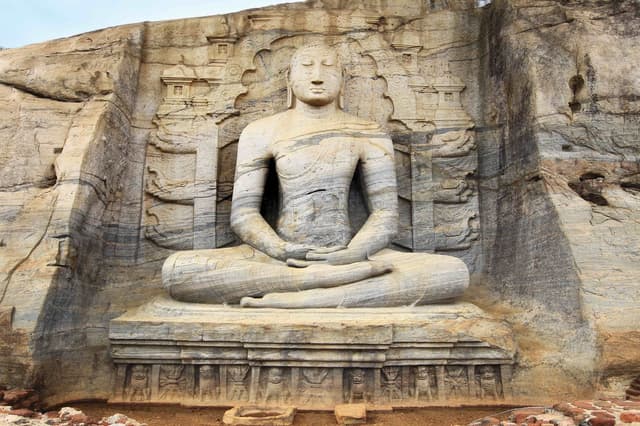
Gal Vihara
Admire four famous Buddha figures carved into a granite rock face within the ancient city.
Stone Sculpture →
See the ruins of Sri Lanka’s medieval capital, from the stone-carved Buddhas of Gal Vihara to royal buildings and ancient reservoirs.
District
Polonnaruwa
Province
North Central Province
Polonnaruwa became a major royal capital after Anuradhapura and is now recognised by UNESCO as an outstanding archaeological city. Its surviving remains reveal the political, religious and artistic life of medieval Sri Lanka, particularly during the twelfth century under King Parakramabahu I.
The archaeological zone includes temple complexes, palace foundations, sculpted stonework and the celebrated Gal Vihara, where Buddha images were carved from a granite outcrop. The city’s ancient hydraulic landscape is equally compelling: the vast Parakrama Samudra reservoir is a reminder of the engineering projects that supported the kingdom.
Because major monuments are distributed across a wide area, visitors often explore by vehicle or bicycle, depending on conditions and comfort. Polonnaruwa combines especially well with other Cultural Triangle destinations, but it is worth giving the ruins enough time to appreciate their scale and artistry.
Plan a visit around four of the best-known sights and experiences in and around Polonnaruwa.
Admire four famous Buddha figures carved into a granite rock face within the ancient city.
Stone Sculpture →
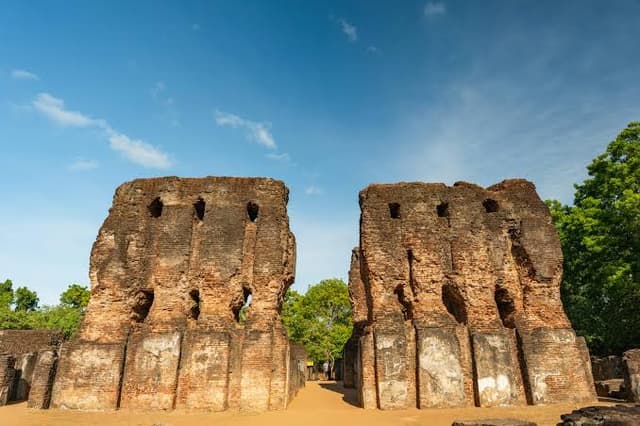
Walk through the protected ruins of the medieval palace and its associated buildings.
Royal History →
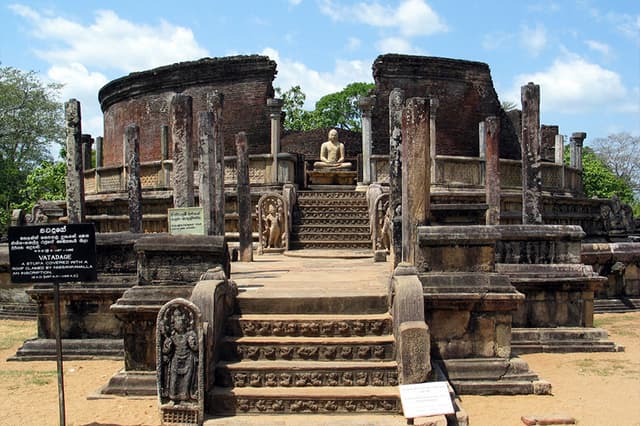
Examine the circular relic-house architecture and stone carvings of the historic sacred precinct.
Sacred Architecture →

See the major reservoir associated with the ancient irrigation landscape of Polonnaruwa.
Ancient Engineering →
These are typical seasonal patterns, not a weather guarantee. Check local forecasts and operator conditions before travel.
Pleasant Sightseeing
A relatively comfortable period for exploring exposed archaeological sites.
Hot Dry-Zone Days
Heat can be substantial in open ruins; visit in cooler hours and plan rest breaks.
Seasonal Showers
Rain can affect cycling and walking on archaeological paths; check local forecasts.
Pleasant Sightseeing
A relatively comfortable period for exploring exposed archaeological sites.
Hot Dry-Zone Days
Heat can be substantial in open ruins; visit in cooler hours and plan rest breaks.
Seasonal Showers
Rain can affect cycling and walking on archaeological paths; check local forecasts.
The ancient city offers a concentrated look at Sri Lanka’s medieval history, important Buddhist sculpture and remarkable water engineering.
Yes. The Ancient City of Polonnaruwa is inscribed on UNESCO’s World Heritage List.
Cycling is a popular option for some visitors, but the archaeological area is extensive and hot. Transport choice should suit the weather and your fitness.
Gal Vihara is a celebrated group of four Buddha images carved in rock, among the best-known monuments of ancient Polonnaruwa.
Let's create a tailor-made journey designed around your interests, your pace, and unforgettable experiences across Sri Lanka.